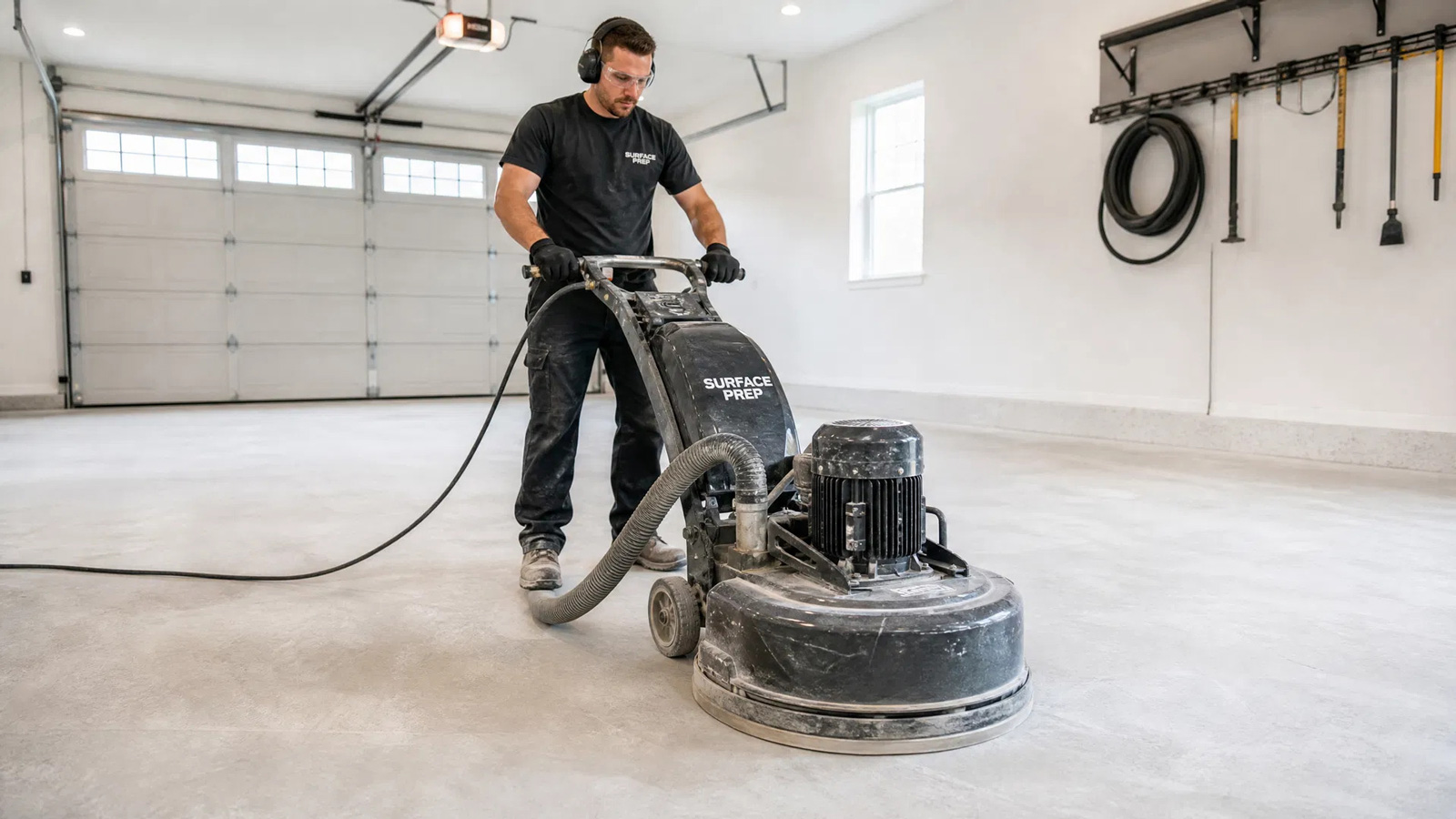
Concrete Surface Preparation
Proper preparation supports adhesion, appearance, and long-term coating performance.
Why surface prep matters
A coating system depends on the concrete beneath it. Weak, dirty, overly smooth, damp, or contaminated concrete can interfere with adhesion, which is why preparation should be evaluated before coating.
Why Preparation Matters So Much
Concrete can hold dust, weak surface material, old coatings, stains, or a dense top layer that makes adhesion more difficult. Professional preparation removes or addresses these conditions and creates a suitable surface profile.
In Rio Rancho and the Albuquerque metro, windblown dust, outdoor tracking, sun exposure, and variable slab conditions make a project-specific assessment more useful than an assumption based only on a neighborhood or climate.
Mechanical grinding is a common professional preparation method. The process can also identify cracks, stains, old coatings, and other conditions that affect the recommended scope.
What Professional Surface Prep May Include
Each garage floor needs its own evaluation. Preparation may include:
- Cleaning dust, dirt, and residue from concrete
- Removing failed coatings, sealers, or weak material when needed
- Repairing cracks, chips, pitting, or surface damage
- Addressing oil stains, moisture questions, or adhesion risks
- Creating a suitable surface profile for the chosen system
Common Concrete Issues and How They’re Handled
During an estimate, a professional should look for floor conditions that affect preparation, coating choice, timing, and cost.
Oil and Grease Stains
Automotive fluids can soak into concrete and interfere with adhesion. The proper response can include cleaning, mechanical preparation, or other treatment based on the floor.
Cracks and Spalling
Small cracks, chips, pitting, and spalled areas may need repair. Larger cracks or movement may need additional review before a coating is recommended.
Moisture Questions
If a slab shows damp areas, prior coating failure, or other moisture indicators, the installer may need to evaluate the conditions before selecting a system.
Existing Coatings or Paint
Old paint, sealers, and coatings may need removal or mechanical preparation depending on their condition and compatibility.
Efflorescence
White, chalky residue can signal moisture movement or surface contamination and should be addressed before a coating project proceeds.
New Concrete
New concrete needs sufficient cure time before coating. Product guidance and actual moisture conditions should guide the schedule.
Related Guides
Cost guide for Rio Rancho and the Albuquerque metroReady to Talk About Your Garage Floor?
Call to discuss concrete condition, coating options, and the next steps for your project.